
لمة | ألعاب جماعية
Adeeb Al-BukhariTrivia
4.759.00 Reviews
- Version
- 20.0.0
- Installs
- 1.00M
- Age Rating
- Everyone
Screenshots
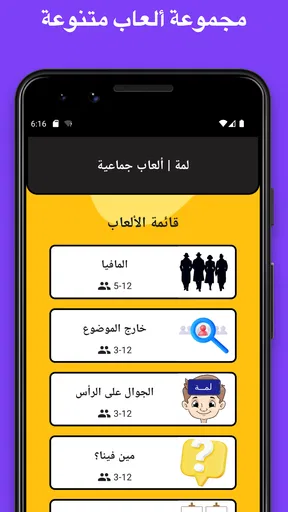
Our Review of لمة | ألعاب جماعية
 Analysis by Appyee
When I want a quick way to get people talking, a social trivia game can be more useful than another solo puzzle or endless scrolling session. لمة | ألعاب جماعية is built around that kind of shared moment: a free trivia game from developer Adeeb Al-Bukhari, aimed at friends and family rather than a single player sitting quietly with a phone. I found its appeal less in complicated systems and more in the way it gives a group an easy reason to laugh, guess, argue playfully, and keep the conversation moving.
The name “Lamma” suggests a gathering, and that is the right way to approach it. I would not install this expecting a deep campaign, a carefully balanced esports experience, or a replacement for a large general-knowledge platform. I would install it when several people are together and need something that can start immediately. That distinction matters because the game’s strongest quality is social usefulness, while its value depends heavily on the people around you.
What the game is really for
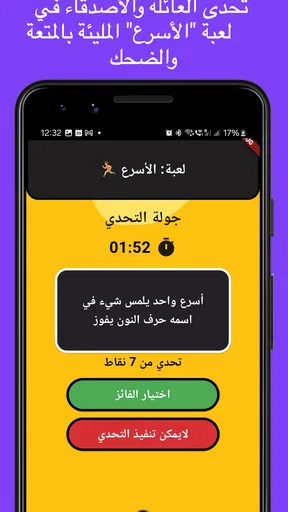
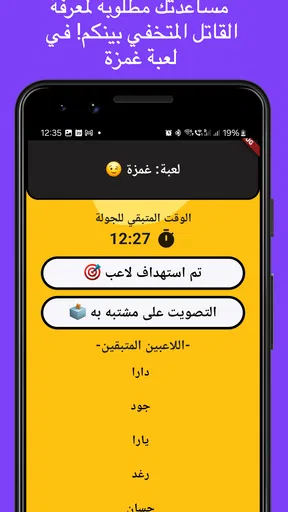
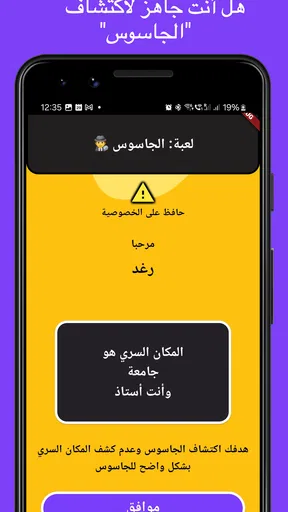
At its core, this is a social trivia game in the Everyone age category. The store summary presents it as a collection of social games intended to bring friends and family together, with fun and laughter at the center. In practice, that makes it a better fit for a living-room gathering, a family visit, or a casual break with friends than for a player searching for a long-term individual challenge.
I like that the concept is immediately understandable. You do not need to explain a complicated story, learn a large rulebook, or prepare a board before starting. Someone can open the game, pass the phone around, and turn a quiet moment into a small competition. That low barrier is especially useful when the group includes people with different gaming habits. A regular mobile player and someone who rarely plays games can still take part in the same activity.
The game is free, which removes the most obvious entry barrier. It is also listed for devices running Android 5.0 or later, so the technical starting point is broad enough to include many older Android phones. The current version is 20.0.0, and the game was released on February 17, 2024. Those details make it easier to judge whether an older device may be suitable, although the experience will still depend on the phone itself and the way the game runs on it.
Its public reception is encouraging: the game has a 4.7 average from around eleven thousand ratings and has passed one million installs. I read those figures as evidence of strong initial appeal, not as proof that every group will enjoy it equally. A trivia game can be well received and still feel repetitive to someone who prefers action, strategy, or private solo play.
How I would use it in an ordinary gathering
Imagine a family waiting for dinner while conversation starts to fade. Instead of handing everyone a separate game, one person opens لمة | ألعاب جماعية and invites the group to play. The phone becomes a shared object rather than a personal screen. People can react to each other’s answers, tease the most confident guesser, and involve relatives who would not normally download a game themselves.
That scenario also reveals an important practical point: the game works best when somebody takes responsibility for the flow. One person may need to hold the phone, explain whose turn it is, and keep the group moving. If everybody expects the app to organize the social atmosphere automatically, the session can lose energy. The software can provide the prompt, but the players provide the mood.
For a small group, I would suggest agreeing on a relaxed approach before beginning. Decide whether the goal is to win, to discover who knows the most, or simply to create funny answers and conversation. This sounds minor, but it prevents a casual family session from becoming unnecessarily tense, especially when younger and older players are together.
Spending, access, and the pressure to continue
Because the game is free, trying it does not require a purchase decision at the start. That is helpful for groups who only want an occasional activity. However, “free” should not automatically be interpreted as a complete statement about every possible spending experience inside a mobile game. The information available for the listing confirms the download price, but it does not establish a detailed purchase structure that I can responsibly describe.
For that reason, I would approach the game with a simple rule: enjoy the free experience first, and do not assume that any optional spending is necessary for the social value. If a group is having fun answering questions together, the important part is already happening around the phone. There is no reason to treat progress, status, or continued play as something that must be bought.
This also helps with younger players. Since the content rating is Everyone, the game is positioned for a broad audience, but parents may still prefer to supervise any mobile game played on a shared family device. The age label describes the intended content level; it does not replace a family’s own decision about screen time, spending habits, or how competitive the session should become.
I would be cautious about judging the game by how quickly it encourages another round. Social games naturally create a “one more turn” feeling because the group is already assembled. That can be enjoyable, but it can also make a short activity last longer than planned. My practical advice is to set a stopping point before a gathering begins, particularly if the game is being used with children or during a meal.
Progress without turning the room into a scoreboard
Trivia is naturally competitive, and that can be the source of both its energy and its friction. A confident player may dominate early questions, while someone with less general knowledge may stop participating if every answer becomes a public defeat. I think this game is best when the group treats progress as a reason to react and learn, not as a permanent ranking of intelligence.
One useful way to keep the atmosphere fair is to vary who answers first and avoid letting the fastest person control every decision. Another is to give players time to discuss an answer before somebody announces it. These are not features I am claiming the app provides; they are ways I would organize a session around it. The distinction matters because the app supplies the game, while the group decides whether the experience feels welcoming.
For mixed-age groups, I would also avoid making every round a test of speed. Younger players may contribute more through memory, word association, or enthusiasm than through rapid recall. Older relatives may know facts that others do not, while children may bring a different kind of confidence. A good host can turn those differences into conversation instead of allowing them to become a reason for one person to withdraw.
The trade-off is clear. If you want measurable long-term progression, detailed personal statistics, or a serious competitive ladder, this may not be the right type of trivia game for you. Its public identity is centered on group entertainment. I would choose a more specialized quiz platform for structured study, formal rankings, or focused solo improvement. I would choose this one when the people matter more than the record.
Fairness between players
Fairness in a group trivia game is not only about whether the questions are correct. It is also about who gets access to the phone, who has time to think, whether everyone understands the rules, and whether the strongest player is allowed to answer everything. In my view, the game is most fair when it is treated as a shared activity rather than a test designed to expose the weakest participant.
A practical method is to create informal teams with mixed knowledge instead of allowing one expert to compete against several casual players alone. This makes the session more cooperative and gives quieter participants a reason to speak. It also reduces the pressure on anyone who feels uncomfortable being wrong in front of the group.
Another useful habit is to discuss disputed answers calmly. Trivia questions can produce strong reactions, especially when wording is interpreted differently. If the group treats every disagreement as a personal challenge, the game stops being relaxing. I would rather pause, read the question carefully, and accept that the point of the round is shared enjoyment.
The free entry point supports fairness in one important sense: nobody needs to buy the game before joining the activity. But I would not claim that the absence of an upfront price guarantees a perfectly equal experience in every situation. What matters to me is whether the group can play comfortably without feeling pushed to spend, and that is something each player should observe during use rather than assume.
Where it fits among familiar alternatives
Compared with a traditional board-game quiz, لمة | ألعاب جماعية is easier to bring to a gathering because the phone replaces cards, pieces, and a table full of materials. That convenience is its clearest advantage. You can start with very little preparation, and the device is already familiar to most players.
Compared with a large online trivia service, its appeal is more intimate. A broad platform may be better if you want a huge public player base, live competition against strangers, or a more formal sense of progression. A social game designed for friends and family is better when you want the people in the room to remain the focus. I would not choose between them based only on the word “trivia”; I would choose according to whether I want a local gathering or a wider competitive environment.
It also differs from a standard solo quiz. In a solo app, the main reward is personal improvement and the quiet satisfaction of getting an answer right. Here, the answer is only part of the experience. The reaction around it—the surprise, laughter, disagreement, or sudden memory from a relative—is often more valuable than the score itself.
That makes the game less suitable for someone who wants uninterrupted concentration. Notifications, conversation, and people interrupting one another are not defects in a group setting, but they can be distractions for a solitary player. If I were studying facts or trying to build a consistent daily learning habit, I would use a dedicated educational tool instead.
Small details that determine whether a session works
The first tip I would give is to prepare the group before opening the first round. Tell everyone that the game is meant to be shared, decide who will manage the phone, and agree on whether discussion is allowed. This removes the awkward pause in which several people reach for the device or assume different rules.
The second is to use it as a conversation starter rather than the entire evening’s plan. A short session can be enough to break the ice before dinner, during a family visit, or at the beginning of a casual get-together. If the group keeps playing naturally, continue; if discussion becomes more interesting than the questions, put the phone down. That flexibility is one of the game’s strengths.
The third is to watch the balance of participation. If one person answers every question, deliberately invite another player to make the next guess. If someone has gone quiet, let them discuss with a teammate instead of putting them on the spot. These adjustments are more important than chasing a perfect score because they determine whether people will want to play again.
A fourth insight is to match the game with the room’s energy. It can help a gathering that feels too quiet, but it cannot rescue a group that is already tired, distracted, or uninterested in trivia. In that case, a simple conversation or a different kind of game may be better. Installing it does not guarantee a good social experience; choosing the right moment does.
What I would check before recommending it widely
I would first check how comfortably the game runs on the specific Android phone being used, especially if it is older. The minimum operating-system requirement is Android 5.0, but compatibility on paper is not the same as a smooth session on every device. I would also make sure the phone has enough battery for a group activity, since passing around a nearly empty device is an avoidable interruption.
I would then test the opening flow with the actual group. A game can be enjoyable in theory but awkward if players do not understand how to begin or if the phone is difficult to share. This is why I prefer trying one short round before planning a longer activity around it. That small test tells you more about suitability than the rating alone.
Finally, I would set expectations about the type of fun involved. This is not my first recommendation for someone who dislikes public guessing, gets frustrated by uncertain answers, or wants a private achievement system. It is a stronger recommendation for people who enjoy talking while playing and who can treat mistakes as part of the joke.
My trust verdict
After looking at the game as a real social tool rather than simply another trivia download, I see a clear and honest purpose. لمة | ألعاب جماعية is a free, Everyone-rated game from Adeeb Al-Bukhari that makes sense when friends or relatives are physically together and need a light activity. Its strong rating and more than one million installs show that the idea has reached a substantial audience, but the real test is whether your group enjoys shared questions more than solo entertainment.
I would recommend it to families, casual friend groups, and anyone who wants a low-preparation way to create interaction around one phone. I would skip it in favor of a dedicated quiz or learning app if my priority were serious study, deep personal progression, or competitive play against a large online community. I would also avoid turning it into a spending contest or a test of who is smartest.
My bottom line: choose it for the people in the room, not for a promise of endless progression. Used with a relaxed host, clear expectations, and a willingness to laugh at wrong answers, it can do exactly what a social trivia game should do: give a gathering an easy shared focus without demanding much preparation.
Verdict
Strengths of لمة | ألعاب جماعية
- Fun party games designed for groups and social gatherings.
- Arabic interface makes the app accessible for local users.
- Quick rounds keep gameplay lively and easy to follow.
- Suitable for different ages and casual gaming experience.
- Encourages conversation, teamwork, and friendly competition.
Limitations of لمة | ألعاب جماعية
- Requires several players to deliver the best experience.
- Some games may become repetitive after frequent sessions.
- Limited appeal for users who do not understand Arabic.
- Gameplay can be noisy or disruptive in quiet environments.
- May offer less value when used alone.
Similar Picks in This Category
View All
Millionaire 2026 Quiz & Trivia
Quiz & Trivia Games by Submarine Apps4.5

Brain Test 2: Tricky Stories
Unico Studio4.7

Trivia Crack: Brain Quiz Games
etermax4.4

QuizzLand. Quiz & Trivia game
Quiz & Trivia Games by Mno Go Apps4.8

Brain Test: Tricky Puzzles
Unico Studio4.7

Logo Quiz
bubble quiz games4.5
Frequently Asked Questions
What is لمة | ألعاب جماعية, and how does it work?
لمة | ألعاب جماعية is a social multiplayer gaming app designed for group entertainment. It brings several party-style games into one place, allowing friends or family members to play together, compete, and interact through their mobile devices. After opening the app, users can usually choose a game, create or join a session, and follow the on-screen instructions to begin playing.
Can I play لمة | ألعاب جماعية with friends remotely?
The app is primarily intended for group play, making it suitable for gatherings and shared entertainment. Depending on the specific game mode and the current version of the application, players may be able to invite friends through online rooms or participate using the same device or local connection. It is recommended to check the available multiplayer options inside the app before downloading.
What types of games are included in لمة | ألعاب جماعية?
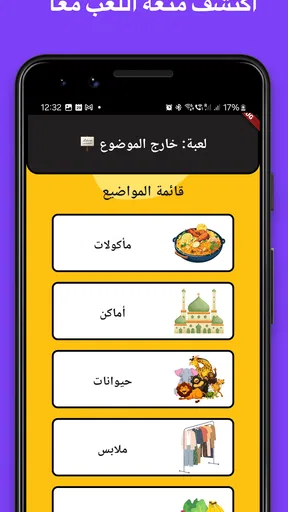
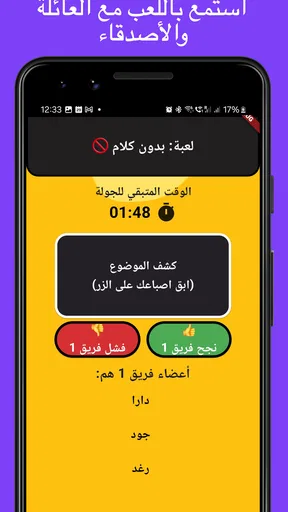
لمة | ألعاب جماعية focuses on casual party games rather than a single long-form adventure or competitive title. The available activities may include quizzes, challenges, guessing games, and other quick multiplayer experiences designed for groups. Game selection can change with updates, so users should review the in-app categories and descriptions to see which activities are currently available.
Is لمة | ألعاب جماعية suitable for children and families?
The app can be a good choice for family gatherings because its main purpose is social, lighthearted gameplay. However, suitability depends on the individual games, language, questions, and content presented during play. Parents should review the app’s age rating and supervise younger children, particularly if the application includes communication features, user-generated content, advertisements, or online interaction.
Does لمة | ألعاب جماعية require an internet connection or create an account?
Some features of لمة | ألعاب جماعية may require an internet connection, especially online multiplayer rooms, updates, advertisements, or synchronization between players. Account requirements can also vary depending on how sessions are created and how invitations are handled. Before starting, check the app’s permissions, sign-in options, and privacy information so you understand what data and connectivity the game may use.
Play our best games!


